Electrolyte Analyzer Dealers in Ahmedabad
Search Intent: buyers seeking electrolyte analyzer dealers.
Laboratory Diagnostics
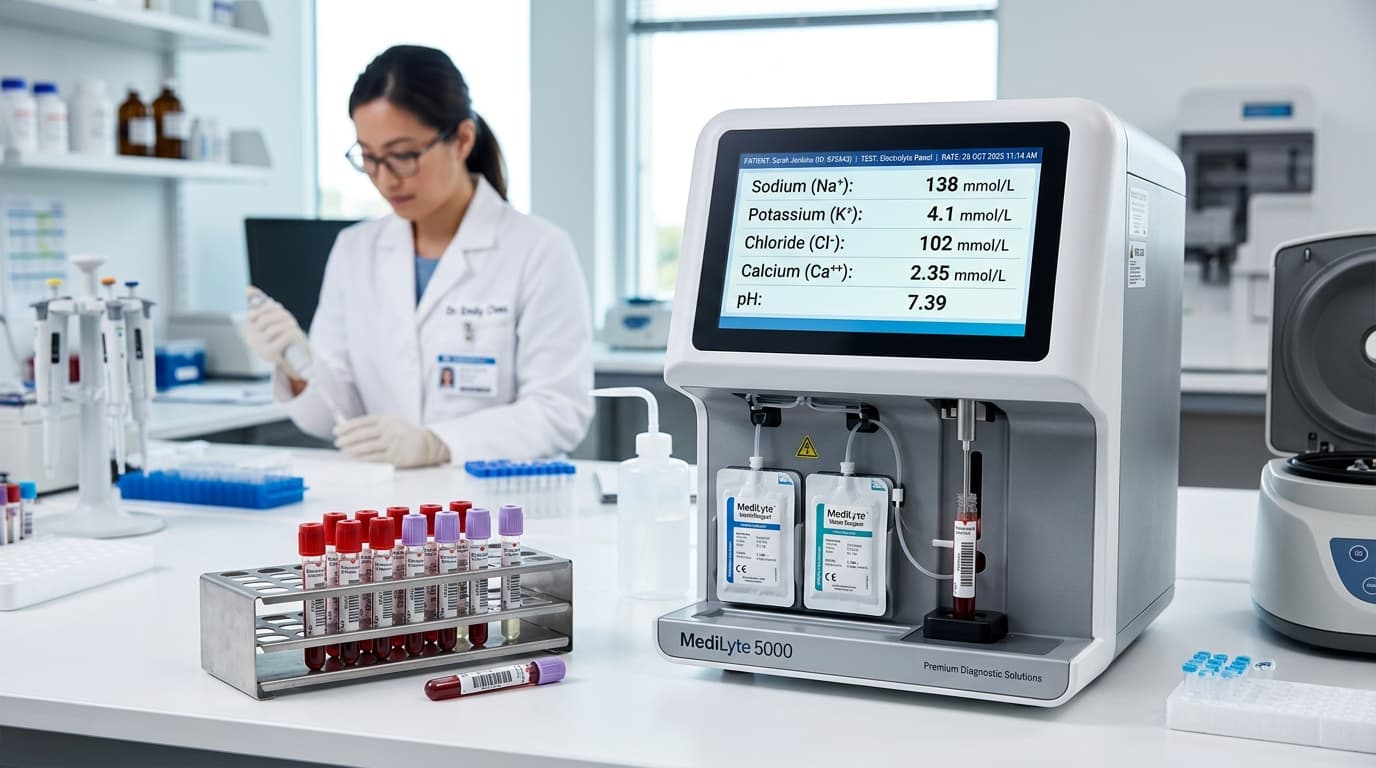
Clinical Electrolyte Analyzer Dealers in Ahmedabad
High-throughput automated electrolyte analyzer with ISE technology measuring Na+, K+, Cl-, and iCa++ ions with precision in diagnostic labs across Ahmedabad.
ISE Ion Sensors
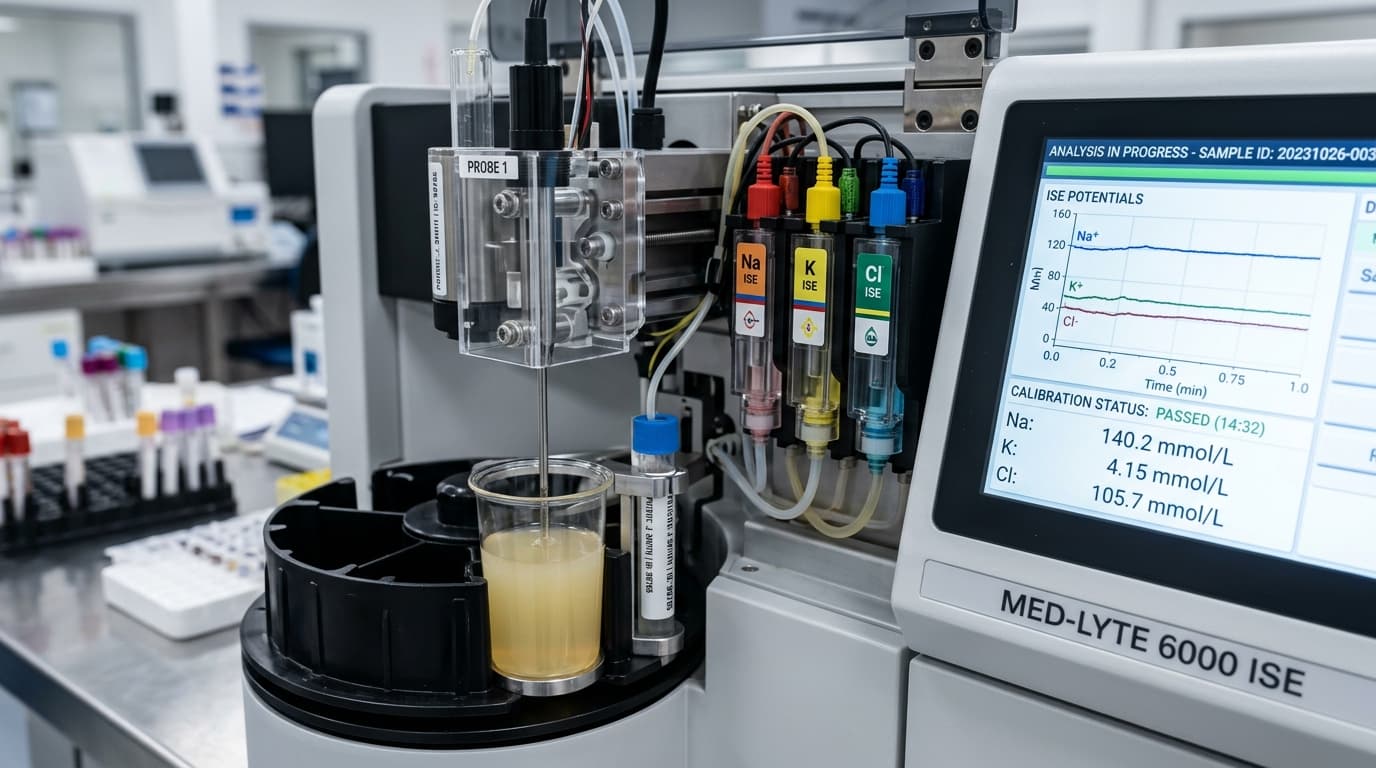
Direct ISE Sample Testing
Maintenance-free ion-selective electrode sensors and automated liquid calibration ensuring rapid 60-second turnaround times for critical ICU and pathology samples.

Wholesale Logistics
Bulk Dispatch & Lab Setup
Wholesale inventory of semi-automated and fully automated electrolyte analyzers ready for rapid installation, reagent pack supply, and calibration in Pune.
Overview of Electrolyte Analyzer Dealers in Ahmedabad
Search Intent: buyers seeking electrolyte analyzer dealers.
Electrolyte Analyzer Dealers in Ahmedabad
If you are searching for electrolyte analyzer dealers in ahmedabad, this Yeda page is designed to help you understand the buying requirement and identify relevant businesses in Ahmedabad. Instead of relying only on a single listing, buyers can use a marketplace-style approach to describe their requirement, compare business information, request quotations and shortlist suitable vendors according to their own technical, commercial and delivery criteria.
Ahmedabad has a broad commercial and industrial ecosystem, so sourcing electrolyte analyzer can involve manufacturers, suppliers, dealers, distributors, traders, wholesalers, retailers, service providers and other business types depending on the exact requirement. Availability, specifications, brands, quantities, lead time and commercial terms can vary between businesses.
Understanding the Product or Service
Electrolyte Analyzer can have different specifications, configurations, capacities, materials, brands and intended applications. Before contacting a seller, define what you actually need: application, quantity, preferred specification, operating environment, required accessories, delivery location and expected timeline. For medical or clinical equipment, buyers should also verify suitability for the intended professional use and review applicable documentation before purchase.
Why Buyers Search This Exact Keyword
The keyword behind this page is usually used when a buyer has moved beyond general research and wants a local source, quotation, availability check or service connection. A buyer may already know the product name but still need to identify the right type of business in Ahmedabad. This makes supplier discovery, comparison and requirement matching important parts of the procurement process.
Key Buying and Selection Factors
Important factors include exact model or specification, application suitability, product quality, quantity availability, warranty or support terms, documentation, delivery schedule, installation requirements where applicable, after-sales support, payment terms and total landed cost. Buyers should compare like-for-like quotations rather than choosing solely on the lowest headline price.
Businesses You May Find on Yeda
Depending on the URL intent, Yeda can help buyers discover relevant manufacturers, suppliers, dealers, distributors, traders, wholesalers, exporters, importers, retailers, companies, service providers, consultants or contractors. Business profiles and availability can vary, so buyers should verify current details directly with the business before placing an order.
Price and Quotation Guidance
The price of electrolyte analyzer is not a single fixed number. It can change with specification, brand, quantity, customization, accessories, taxes, freight, installation, warranty and service scope. For a reliable commercial comparison, send the same requirement to multiple relevant businesses and request itemized quotations. Ask suppliers to clearly state taxes, delivery charges, validity, payment terms and expected dispatch or completion time.
How to Request a Quotation
Prepare a short RFQ containing the product name, specification, quantity, application, delivery location in or around Ahmedabad, preferred brand if any, required documentation and target delivery date. For equipment, include model preferences, electrical requirements, capacity and accessories where relevant. Clear requirements reduce back-and-forth communication and make supplier quotations easier to compare.
How to Compare Multiple Quotations
Create a simple comparison covering product specification, brand/model, quantity, unit price, taxes, freight, warranty, installation, service support, delivery time and payment terms. Also check whether the quoted item exactly matches your requirement. A lower initial quote may not remain lower after freight, accessories, installation or service costs are included.
Local / Near-Me Procurement
For buyers searching locally, proximity can matter when inspection, urgent delivery, installation, demonstrations or after-sales support are important. However, location alone should not determine the selection. Compare technical suitability, business credentials, availability and commercial terms along with distance.
Online Buying Considerations
Online enquiries can save time, but buyers should verify seller identity, product specifications, photos, documentation, return or replacement conditions, warranty and payment instructions. For higher-value medical equipment, request formal quotations and supporting documents before making payment.
Used, Refurbished, Rental or Hire
Where the URL indicates used, refurbished, rental or hire intent, buyers should confirm equipment condition, age, service history, included accessories, availability period, deposit or rental terms and responsibility for repairs. For equipment used in professional environments, functional verification and appropriate documentation should be completed before deployment.
Repair, AMC, Calibration, Installation and Maintenance
Some search phrases use service terminology for products that may be consumables or accessories. In such cases, the relevant requirement may actually relate to associated equipment, systems, accessories or supporting infrastructure rather than the consumable itself. Confirm the exact service scope with the provider before booking. For equipment, ask what is included, expected downtime, visit charges, spare parts and documentation.
Why Use Yeda
Yeda is intended to simplify business discovery and quotation comparison. A buyer can describe a requirement, identify relevant business categories and communicate with businesses that may be able to supply the requested product or service. Yeda does not remove the buyer's responsibility to verify specifications, commercial terms, credentials, warranty and suitability.
Detailed Procurement Checklist
Before finalizing electrolyte analyzer, check: exact requirement; technical specification; intended application; quantity; preferred brands; compatibility; accessories; documentation; warranty; service support; delivery location; delivery timeline; taxes; freight; installation; payment terms; quotation validity; replacement policy; and contact details. Keep written confirmation of all agreed commercial and technical terms.
Buyer Questions to Ask
Ask the business: Is the requested specification available? What brand/model is being quoted? What is the minimum order quantity? What is the current lead time? Does the price include taxes and freight? What warranty or support is included? Are accessories included? Is installation required? What documentation will be supplied? What are payment terms? Can you provide an itemized quotation?
Ahmedabad Procurement Considerations
Ahmedabad buyers may source locally or from other parts of Gujarat and India. Compare delivery time, freight, service availability and response time rather than limiting the search only to the nearest seller. For institutional or clinical procurement, maintain a clear RFQ trail and obtain formal commercial documentation.
Suggested Image ALT Tags
Suggested ALT tags: electrolyte analyzer in Ahmedabad; electrolyte analyzer suppliers in Ahmedabad; electrolyte analyzer dealers Ahmedabad; electrolyte analyzer quotation; electrolyte analyzer price in Ahmedabad; electrolyte analyzer procurement.
Suggested Internal Links
Consider linking this page to the main Ahmedabad medical-equipment category, related electrolyte analyzer supplier/dealer/manufacturer pages, price and quotation pages, and closely related equipment or accessory pages. Use descriptive anchor text and avoid excessive repetitive exact-match links.
FAQs
Q1. How can I find electrolyte analyzer businesses in Ahmedabad? A. Use Yeda to discover relevant business categories and submit a clear requirement.Q2. How do I get the price? A. Request an itemized quotation because price depends on specification, quantity and commercial terms.Q3. Can I compare multiple suppliers? A. Yes. Send a consistent RFQ and compare technical and commercial terms side by side.Q4. What should I verify before ordering? A. Verify specification, seller details, warranty, documentation, delivery, taxes, freight and payment terms.Q5. Can I find service support? A. Where relevant, search the corresponding service, repair, AMC, calibration, installation or maintenance category and confirm the exact scope with the provider.
Final Procurement Note
Use this Yeda page as a starting point for structured supplier discovery. Define your requirement clearly, request comparable quotations, verify the business and product information, and confirm all technical and commercial terms in writing before placing an order. The goal is to make procurement more organized while leaving the final business decision with the buyer.
Detailed Buying Guidance
When evaluating electrolyte analyzer, begin with the application rather than the seller. The same product category may cover multiple specifications, and a quotation that looks attractive may not meet the intended use. Write down the operating conditions, quantity, preferred configuration and any mandatory requirements before contacting businesses.
For institutional procurement, keep the requirement document consistent for every supplier. This makes the comparison fairer because each quotation responds to the same scope. Ask suppliers to separate product cost, taxes, freight, installation and optional items so that the total commercial picture is visible.
Availability should also be confirmed at the time of enquiry. Stock status, production schedules and delivery commitments can change. A supplier may have a standard model immediately while a customized or branded configuration requires additional lead time.
After-sales support can be important for equipment purchases. Ask who handles service, whether support is local, whether spare parts are available and what the warranty covers. If the requirement involves installation, calibration or preventive maintenance, define those services in the purchase scope rather than assuming they are included.
For buyers comparing new, used or refurbished options, evaluate total cost over the expected period of use. A lower purchase price can involve higher service or replacement costs, while a higher initial price may include warranty, accessories or support. The appropriate option depends on the buyer's application and procurement policy.
Buyers should also keep a record of quotations and correspondence. Record the quotation date, validity, model, quantity, taxes, delivery commitment, warranty and payment conditions. This creates a useful audit trail and reduces misunderstandings when the order is finalized.
Yeda can be used as a discovery and enquiry channel, but buyers should independently verify business details and suitability before contracting. Listing or enquiry availability should not be interpreted as a guarantee that a particular business currently holds stock, offers a specific brand or can meet every technical requirement.
When evaluating electrolyte analyzer, begin with the application rather than the seller. The same product category may cover multiple specifications, and a quotation that looks attractive may not meet the intended use. Write down the operating conditions, quantity, preferred configuration and any mandatory requirements before contacting businesses.
For institutional procurement, keep the requirement document consistent for every supplier. This makes the comparison fairer because each quotation responds to the same scope. Ask suppliers to separate product cost, taxes, freight, installation and optional items so that the total commercial picture is visible.
Availability should also be confirmed at the time of enquiry. Stock status, production schedules and delivery commitments can change. A supplier may have a standard model immediately while a customized or branded configuration requires additional lead time.
After-sales support can be important for equipment purchases. Ask who handles service, whether support is local, whether spare parts are available and what the warranty covers. If the requirement involves installation, calibration or preventive maintenance, define those services in the purchase scope rather than assuming they are included.
For buyers comparing new, used or refurbished options, evaluate total cost over the expected period of use. A lower purchase price can involve higher service or replacement costs, while a higher initial price may include warranty, accessories or support. The appropriate option depends on the buyer's application and procurement policy.
Buyers should also keep a record of quotations and correspondence. Record the quotation date, validity, model, quantity, taxes, delivery commitment, warranty and payment conditions. This creates a useful audit trail and reduces misunderstandings when the order is finalized.
Yeda can be used as a discovery and enquiry channel, but buyers should independently verify business details and suitability before contracting. Listing or enquiry availability should not be interpreted as a guarantee that a particular business currently holds stock, offers a specific brand or can meet every technical requirement.
When evaluating electrolyte analyzer, begin with the application rather than the seller. The same product category may cover multiple specifications, and a quotation that looks attractive may not meet the intended use. Write down the operating conditions, quantity, preferred configuration and any mandatory requirements before contacting businesses.
For institutional procurement, keep the requirement document consistent for every supplier. This makes the comparison fairer because each quotation responds to the same scope. Ask suppliers to separate product cost, taxes, freight, installation and optional items so that the total commercial picture is visible.
Availability should also be confirmed at the time of enquiry. Stock status, production schedules and delivery commitments can change. A supplier may have a standard model immediately while a customized or branded configuration requires additional lead time.
After-sales support can be important for equipment purchases. Ask who handles service, whether support is local, whether spare parts are available and what the warranty covers. If the requirement involves installation, calibration or preventive maintenance, define those services in the purchase scope rather than assuming they are included.
For buyers comparing new, used or refurbished options, evaluate total cost over the expected period of use. A lower purchase price can involve higher service or replacement costs, while a higher initial price may include warranty, accessories or support. The appropriate option depends on the buyer's application and procurement policy.
Buyers should also keep a record of quotations and correspondence. Record the quotation date, validity, model, quantity, taxes, delivery commitment, warranty and payment conditions. This creates a useful audit trail and reduces misunderstandings when the order is finalized.
Yeda can be used as a discovery and enquiry channel, but buyers should independently verify business details and suitability before contracting. Listing or enquiry availability should not be interpreted as a guarantee that a particular business currently holds stock, offers a specific brand or can meet every technical requirement.
When evaluating electrolyte analyzer, begin with the application rather than the seller. The same product category may cover multiple specifications, and a quotation that looks attractive may not meet the intended use. Write down the operating conditions, quantity, preferred configuration and any mandatory requirements before contacting businesses.
For institutional procurement, keep the requirement document consistent for every supplier. This makes the comparison fairer because each quotation responds to the same scope. Ask suppliers to separate product cost, taxes, freight, installation and optional items so that the total commercial picture is visible.
Availability should also be confirmed at the time of enquiry. Stock status, production schedules and delivery commitments can change. A supplier may have a standard model immediately while a customized or branded configuration requires additional lead time.
After-sales support can be important for equipment purchases. Ask who handles service, whether support is local, whether spare parts are available and what the warranty covers. If the requirement involves installation, calibration or preventive maintenance, define those services in the purchase scope rather than assuming they are included.
For buyers comparing new, used or refurbished options, evaluate total cost over the expected period of use. A lower purchase price can involve higher service or replacement costs, while a higher initial price may include warranty, accessories or support. The appropriate option depends on the buyer's application and procurement policy.
Buyers should also keep a record of quotations and correspondence. Record the quotation date, validity, model, quantity, taxes, delivery commitment, warranty and payment conditions. This creates a useful audit trail and reduces misunderstandings when the order is finalized.
Yeda can be used as a discovery and enquiry channel, but buyers should independently verify business details and suitability before contracting. Listing or enquiry availability should not be interpreted as a guarantee that a particular business currently holds stock, offers a specific brand or can meet every technical requirement.
When evaluating electrolyte analyzer, begin with the application rather than the seller. The same product category may cover multiple specifications, and a quotation that looks attractive may not meet the intended use. Write down the operating conditions, quantity, preferred configuration and any mandatory requirements before contacting businesses.
For institutional procurement, keep the requirement document consistent for every supplier. This makes the comparison fairer because each quotation responds to the same scope. Ask suppliers to separate product cost, taxes, freight, installation and optional items so that the total commercial picture is visible.
Availability should also be confirmed at the time of enquiry. Stock status, production schedules and delivery commitments can change. A supplier may have a standard model immediately while a customized or branded configuration requires additional lead time.
After-sales support can be important for equipment purchases. Ask who handles service, whether support is local, whether spare parts are available and what the warranty covers. If the requirement involves installation, calibration or preventive maintenance, define those services in the purchase scope rather than assuming they are included.
For buyers comparing new, used or refurbished options, evaluate total cost over the expected period of use. A lower purchase price can involve higher service or replacement costs, while a higher initial price may include warranty, accessories or support. The appropriate option depends on the buyer's application and procurement policy.
Buyers should also keep a record of quotations and correspondence. Record the quotation date, validity, model, quantity, taxes, delivery commitment, warranty and payment conditions. This creates a useful audit trail and reduces misunderstandings when the order is finalized.
Yeda can be used as a discovery and enquiry channel, but buyers should independently verify business details and suitability before contracting. Listing or enquiry availability should not be interpreted as a guarantee that a particular business currently holds stock, offers a specific brand or can meet every technical requirement.
When evaluating electrolyte analyzer, begin with the application rather than the seller. The same product category may cover multiple specifications, and a quotation that looks attractive may not meet the intended use. Write down the operating conditions, quantity, preferred configuration and any mandatory requirements before contacting businesses.
For institutional procurement, keep the requirement document consistent for every supplier. This makes the comparison fairer because each quotation responds to the same scope. Ask suppliers to separate product cost, taxes, freight, installation and optional items so that the total commercial picture is visible.
Availability should also be confirmed at the time of enquiry. Stock status, production schedules and delivery commitments can change. A supplier may have a standard model immediately while a customized or branded configuration requires additional lead time.
After-sales support can be important for equipment purchases. Ask who handles service, whether support is local, whether spare parts are available and what the warranty covers. If the requirement involves installation, calibration or preventive maintenance, define those services in the purchase scope rather than assuming they are included.
For buyers comparing new, used or refurbished options, evaluate total cost over the expected period of use. A lower purchase price can involve higher service or replacement costs, while a higher initial price may include warranty, accessories or support. The appropriate option depends on the buyer's application and procurement policy.
Buyers should also keep a record of quotations and correspondence. Record the quotation date, validity, model, quantity, taxes, delivery commitment, warranty and payment conditions. This creates a useful audit trail and reduces misunderstandings when the order is finalized.
Yeda can be used as a discovery and enquiry channel, but buyers should independently verify business details and suitability before contracting. Listing or enquiry availability should not be interpreted as a guarantee that a particular business currently holds stock, offers a specific brand or can meet every technical requirement.
When evaluating electrolyte analyzer, begin with the application rather than the seller. The same product category may cover multiple specifications, and a quotation that looks attractive may not meet the intended use. Write down the operating conditions, quantity, preferred configuration and any mandatory requirements before contacting businesses.
For institutional procurement, keep the requirement document consistent for every supplier. This makes the comparison fairer because each quotation responds to the same scope. Ask suppliers to separate product cost, taxes, freight, installation and optional items so that the total commercial picture is visible.
Availability should also be confirmed at the time of enquiry. Stock status, production schedules and delivery commitments can change. A supplier may have a standard model immediately while a customized or branded configuration requires additional lead time.
After-sales support can be important for equipment purchases. Ask who handles service, whether support is local, whether spare parts are available and what the warranty covers. If the requirement involves installation, calibration or preventive maintenance, define those services in the purchase scope rather than assuming they are included.
For buyers comparing new, used or refurbished options, evaluate total cost over the expected period of use. A lower purchase price can involve higher service or replacement costs, while a higher initial price may include warranty, accessories or support. The appropriate option depends on the buyer's application and procurement policy.
Buyers should also keep a record of quotations and correspondence. Record the quotation date, validity, model, quantity, taxes, delivery commitment, warranty and payment conditions. This creates a useful audit trail and reduces misunderstandings when the order is finalized.
Yeda can be used as a discovery and enquiry channel, but buyers should independently verify business details and suitability before contracting. Listing or enquiry availability should not be interpreted as a guarantee that a particular business currently holds stock, offers a specific brand or can meet every technical requirement.
When evaluating electrolyte analyzer, begin with the application rather than the seller. The same product category may cover multiple specifications, and a quotation that looks attractive may not meet the intended use. Write down the operating conditions, quantity, preferred configuration and any mandatory requirements before contacting businesses.
For institutional procurement, keep the requirement document consistent for every supplier. This makes the comparison fairer because each quotation responds to the same scope. Ask suppliers to separate product cost, taxes, freight, installation and optional items so that the total commercial picture is visible.
Availability should also be confirmed at the time of enquiry. Stock status, production schedules and delivery commitments can change. A supplier may have a standard model immediately while a customized or branded configuration requires additional lead time.
After-sales support can be important for equipment purchases. Ask who handles service, whether support is local, whether spare parts are available and what the warranty covers. If the requirement involves installation, calibration or preventive maintenance, define those services in the purchase scope rather than assuming they are included.
For buyers comparing new, used or refurbished options, evaluate total cost over the expected period of use. A lower purchase price can involve higher service or replacement costs, while a higher initial price may include warranty, accessories or support. The appropriate option depends on the buyer's application and procurement policy.
Buyers should also keep a record of quotations and correspondence. Record the quotation date, validity, model, quantity, taxes, delivery commitment, warranty and payment conditions. This creates a useful audit trail and reduces misunderstandings when the order is finalized.
Yeda can be used as a discovery and enquiry channel, but buyers should independently verify business details and suitability before contracting. Listing or enquiry availability should not be interpreted as a guarantee that a particular business currently holds stock, offers a specific brand or can meet every technical requirement.
When evaluating electrolyte analyzer, begin with the application rather than the seller. The same product category may cover multiple specifications, and a quotation that looks attractive may not meet the intended use. Write down the operating conditions, quantity, preferred configuration and any mandatory requirements before contacting businesses.
For institutional procurement, keep the requirement document consistent for every supplier. This makes the comparison fairer because each quotation responds to the same scope. Ask suppliers to separate product cost, taxes, freight, installation and optional items so that the total commercial picture is visible.
Availability should also be confirmed at the time of enquiry. Stock status, production schedules and delivery commitments can change. A supplier may have a standard model immediately while a customized or branded configuration requires additional lead time.
After-sales support can be important for equipment purchases. Ask who handles service, whether support is local, whether spare parts are available and what the warranty covers. If the requirement involves installation, calibration or preventive maintenance, define those services in the purchase scope rather than assuming they are included.
For buyers comparing new, used or refurbished options, evaluate total cost over the expected period of use. A lower purchase price can involve higher service or replacement costs, while a higher initial price may include warranty, accessories or support. The appropriate option depends on the buyer's application and procurement policy.
Buyers should also keep a record of quotations and correspondence. Record the quotation date, validity, model, quantity, taxes, delivery commitment, warranty and payment conditions. This creates a useful audit trail and reduces misunderstandings when the order is finalized.
Yeda can be used as a discovery and enquiry channel, but buyers should independently verify business details and suitability before contracting. Listing or enquiry availability should not be interpreted as a guarantee that a particular business currently holds stock, offers a specific brand or can meet every technical requirement.
When evaluating electrolyte analyzer, begin with the application rather than the seller. The same product category may cover multiple specifications, and a quotation that looks attractive may not meet the intended use. Write down the operating conditions, quantity, preferred configuration and any mandatory requirements before contacting businesses.
For institutional procurement, keep the requirement document consistent for every supplier. This makes the comparison fairer because each quotation responds to the same scope. Ask suppliers to separate product cost, taxes, freight, installation and optional items so that the total commercial picture is visible.
Availability should also be confirmed at the time of enquiry. Stock status, production schedules and delivery commitments can change. A supplier may have a standard model immediately while a customized or branded configuration requires additional lead time.
After-sales support can be important for equipment purchases. Ask who handles service, whether support is local, whether spare parts are available and what the warranty covers. If the requirement involves installation, calibration or preventive maintenance, define those services in the purchase scope rather than assuming they are included.
For buyers comparing new, used or refurbished options, evaluate total cost over the expected period of use. A lower purchase price can involve higher service or replacement costs, while a higher initial price may include warranty, accessories or support. The appropriate option depends on the buyer's application and procurement policy.
Buyers should also keep a record of quotations and correspondence. Record the quotation date, validity, model, quantity, taxes, delivery commitment, warranty and payment conditions. This creates a useful audit trail and reduces misunderstandings when the order is finalized.
Yeda can be used as a discovery and enquiry channel, but buyers should independently verify business details and suitability before contracting. Listing or enquiry availability should not be interpreted as a guarantee that a particular business currently holds stock, offers a specific brand or can meet every technical requirement.
When evaluating electrolyte analyzer, begin with the application rather than the seller. The same product category may cover multiple specifications, and a quotation that looks attractive may not meet the intended use. Write down the operating conditions, quantity, preferred configuration and any mandatory requirements before contacting businesses.
For institutional procurement, keep the requirement document consistent for every supplier. This makes the comparison fairer because each quotation responds to the same scope. Ask suppliers to separate product cost, taxes, freight, installation and optional items so that the total commercial picture is visible.
Availability should also be confirmed at the time of enquiry. Stock status, production schedules and delivery commitments can change. A supplier may have a standard model immediately while a customized or branded configuration requires additional lead time.
After-sales support can be important for equipment purchases. Ask who handles service, whether support is local, whether spare parts are available and what the warranty covers. If the requirement involves installation, calibration or preventive maintenance, define those services in the purchase scope rather than assuming they are included.
For buyers comparing new, used or refurbished options, evaluate total cost over the expected period of use. A lower purchase price can involve higher service or replacement costs, while a higher initial price may include warranty, accessories or support. The appropriate option depends on the buyer's application and procurement policy.
Buyers should also keep a record of quotations and correspondence. Record the quotation date, validity, model, quantity, taxes, delivery commitment, warranty and payment conditions. This creates a useful audit trail and reduces misunderstandings when the order is finalized.
Yeda can be used as a discovery and enquiry channel, but buyers should independently verify business details and suitability before contracting. Listing or enquiry availability should not be interpreted as a guarantee that a particular business currently holds stock, offers a specific brand or can meet every technical requirement.
When evaluating electrolyte analyzer, begin with the application rather than the seller. The same product category may cover multiple specifications, and a quotation that looks attractive may not meet the intended use. Write down the operating conditions, quantity, preferred configuration and any mandatory requirements before contacting businesses.
For institutional procurement, keep the requirement document consistent for every supplier. This makes the comparison fairer because each quotation responds to the same scope. Ask suppliers to separate product cost, taxes, freight, installation and optional items so that the total commercial picture is visible.
Availability should also be confirmed at the time of enquiry. Stock status, production schedules and delivery commitments can change. A supplier may have a standard model immediately while a customized or branded configuration requires additional lead time.
After-sales support can be important for equipment purchases. Ask who handles service, whether support is local, whether spare parts are available and what the warranty covers. If the requirement involves installation, calibration or preventive maintenance, define those services in the purchase scope rather than assuming they are included.
For buyers comparing new, used or refurbished options, evaluate total cost over the expected period of use. A lower purchase price can involve higher service or replacement costs, while a higher initial price may include warranty, accessories or support. The appropriate option depends on the buyer's application and procurement policy.
Buyers should also keep a record of quotations and correspondence. Record the quotation date, validity, model, quantity, taxes, delivery commitment, warranty and payment conditions. This creates a useful audit trail and reduces misunderstandings when the order is finalized.
Yeda can be used as a discovery and enquiry channel, but buyers should independently verify business details and suitability before contracting. Listing or enquiry availability should not be interpreted as a guarantee that a particular business currently holds stock, offers a specific brand or can meet every technical requirement.
Electrolyte Analyzer Distributors in Ahmedabad
Yeda.co.in SEO Landing Page #40
Related Medical & Bandage Services in Ahmedabad
Explore All Medical Equipment & Healthcare in Ahmedabad
Browse verified distributors, dealers, and suppliers across Ahmedabad.
Verified Medical Equipment Directory & Hospital Supplies
Find medical products, hospital consumables, and healthcare equipment suppliers.